

The Reality of Farming Life in Uganda
Farming in rural Uganda is a labor of love, but let’s be honest about what every farmer knows: the wait between planting and harvest can be long, and even the most bountiful harvest can be affected by unpredictable weather, market fluctuations, or unexpected family emergencies. When your family’s income depends entirely on one or two harvest seasons each year, a single setback can mean months of financial strain.
This is why many successful farming families in the Greater Masaka region have discovered something powerful: income diversification isn’t just a fancy development term, it’s a practical strategy that creates financial breathing room during farming’s lean months and builds resilience against life’s uncertainties.
At Rural Development Foundation (RDF), we understand that true financial stability comes from having multiple streams of income flowing into your household. That’s why our Income Diversification Support goes beyond agricultural loans to help rural families start sustainable, non-farming businesses that complement their farming activities.
RDF supports rural families in starting non-farming businesses through micro loans with flexible repayment: tailoring (clothing repair and production), small trade (retail shops and kiosks), and grain milling (posho mills and processing). These businesses provide steady monthly income to complement seasonal farming revenue, with loan amounts tailored to your needs and repayment plans structured around your business cash flow.
In this guide, we’ll explore:
- Why income diversification is the key to financial resilience for farming families
2. Three proven non-farming businesses that work well alongside agriculture in rural Uganda
3. Exactly how RDF’s micro loans and support can help you start each business
4. Real stories from Masaka residents who’ve successfully diversified their income
Step-by-step guidance on applying for a micro loan and launching your venture
Whether you’re looking to smooth out your family’s monthly cash flow, save for your children’s education, or build a safety net for emergencies, we’re in this together.
Why Income Diversification Matters for Rural Families:
The Agricultural Income Gap
Most farming families in Uganda experience what we call the agricultural income gap—those months between harvests when money is tight but household expenses continue. School fees don’t wait for harvest. Medical emergencies don’t check the farming calendar. And daily needs like food, soap, and paraffin must be met year-round.
For coffee farmers in Masaka, this gap can stretch 8-10 months. For maize farmers, it might be 4-6 months. During these periods, families often resort to selling crops at lower prices for quick cash, taking high-interest loans from informal lenders, or reducing their standard of living—none of which builds long-term prosperity.
The Power of Multiple Income Streams
Income diversification changes this equation completely. When you have a tailoring business generating UGX 200,000-400,000 monthly alongside your farming income, you create:
Cash flow stability: Monthly income from your business covers daily expenses while farming profits can be saved or invested in improvements
Risk reduction: If the rains fail or crop prices drop, your business income keeps the household running
Investment capacity: Extra income allows you to buy improved seeds, hire labor during planting, or expand your land gradually
Family security: You can afford school fees on time, handle medical emergencies without selling assets, and plan for the future
PRO TIP FROM THE FIELD: Our loan officers at RDF notice that the most successful clients don’t wait for a bad harvest to think about diversification. They start small businesses during good farming years, when they can invest time in learning new skills and building customer relationships. By the time a lean season arrives, their business is already established and generating income. |
Business 1: Tailoring & Clothing Services
Why Tailoring Works in Rural Communities
Tailoring is one of the most reliable income-generating activities in rural Uganda because everyone needs clothes repaired, adjusted, or newly made. Unlike farming, which depends on seasons and weather, tailoring provides steady demand throughout the year. School uniforms need repairs in January. New gomesis are needed for weddings and introductions year-round. Children constantly outgrow their clothes.
What makes tailoring especially powerful for farming families is its flexibility. You can operate from home, work during farming’s less busy periods, and even involve family members in simpler tasks like button-sewing or hemming. The startup costs are moderate, and once you have a sewing machine and basic skills, your main expense is fabric, which customers often provide themselves for custom work.
What You Can Offer
A successful tailoring business in rural areas typically offers a mix of services:
Clothing repairs: Fixing torn seams, replacing zippers, shortening or lengthening garments (quick work with steady demand)
School uniform production: Making or altering uniforms for local schools (high-volume business during school terms)
Traditional wear: Gomesis, kanzus, and special occasion outfits (higher profit margins)
Casual clothing: Simple dresses, shirts, and children’s wear from customer-provided or purchased fabric
Curtains and household items: Extra service that uses your machine during slower periods
How RDF Supports Your Tailoring Business;
Startup capital: Microloans from UGX 500,000 to UGX 3,000,000 to purchase a quality sewing machine, thread, needles, scissors, measuring tape, and initial fabric stock
Flexible repayment: Monthly repayment plans structured around your business income generation, not rigid bank schedules
Financial literacy training: Before advancing your loan, we ensure you understand how to track income and expenses, price your services profitably, and manage cash flow
Ongoing support: Our field officers check in regularly to help you overcome challenges and connect you with other tailors for knowledge sharing
Getting Started: Your Tailoring Roadmap
Here’s your step-by-step path from idea to operating business:
1. Skills assessment: If you already have tailoring skills from school or apprenticeship, great\! If not, consider a 3-6 month skills training program (RDF can connect you with local trainers or vocational schools)
2. Business planning: Identify your target customers (school children, wedding clients, everyday repairs?), research local prices, and estimate monthly expenses versus income
3. Apply for your RDF micro loan: Visit our office at Plot 20 Birch Avenue, Kizungu Masaka or apply online at rdfuganda.org. Bring identification, proof of residence, and your business plan
4. Complete financial literacy training: Attend our required workshop where you’ll learn basic bookkeeping, pricing strategies, and customer relationship management
5. Purchase equipment: Once approved, buy a reliable sewing machine (manual or electric depending on power availability), essential tools, and starter supplies
6. Set up workspace: Designate a clean, well-lit area in your home or rent a small space in a trading center—location near schools or markets increases visibility
7. Start small and build: Begin with repairs and alterations to build reputation, then gradually take on custom orders as skills and confidence grow
8. Market consistently: Tell everyone you know, display finished work visibly, offer introductory discounts, and deliver excellent service to generate word-of-mouth referrals
REAL IMPACT STORY: Mama Christine, a coffee farmer from Kyanamukaaka, took a UGX 1,500,000 loan to start a tailoring business in 2023. “During the coffee off-season, I used to struggle to pay school fees. Now my sewing brings in UGX 300,000-450,000 every month. I’ve even hired my niece to help during busy periods, and our family can save part of the coffee harvest money instead of spending it all.”
Business 2: Small Trade (Retail Shops & Kiosks)
Why Small Trade Complements Farming
Operating a small shop or kiosk is perhaps the most straightforward way to generate daily income in rural areas. The beauty of retail trade lies in its immediate cash flow—unlike farming where you wait months for harvest, a shop generates money every single day as customers purchase essential items they need right now.
For farming families, a small shop creates perfect synergy. During planting and harvesting when you’re busy in the fields, family members (spouse, older children, or trusted relatives) can mind the shop. During agricultural off-seasons, you can focus more attention on expanding product selection, building customer relationships, and growing the business. The shop also becomes a community gathering point where you learn about neighbors’ needs—information that can help both your retail and farming activities.
Types of Small Trade Businesses That Work
Successful small trade ventures in rural Uganda typically focus on essential, fast-moving items:
General merchandise shop: Soap, sugar, salt, cooking oil, matches, paraffin, batteries—daily necessities with consistent demand
Produce and foodstuffs: Fresh vegetables, fruits, dried goods like beans and maize flour (particularly profitable if you can source from local farmers)
Airtime and mobile money: Adding mobile services to your shop increases foot traffic and provides steady commission income
Stationery and school supplies: Books, pens, pencils, exercise books are essential during school terms, with predictable seasonal demand spikes
Specialized kiosk: Chapati and snacks, soft drinks and refreshments, or cooked food for local workers and students
How RDF Empowers Your Small Trade Venture
RDF’s approach to supporting small trade businesses focuses on sustainable growth:
Working capital loans: Access UGX 500,000 to UGX 5,000,000 to purchase initial inventory, shelving, containers, and basic equipment
Business-friendly repayment: Monthly installments designed to match your sales cycle, with amounts you can manage from daily profits
Inventory management training: Learn how to stock the right products, avoid dead inventory, and maintain optimal stock levels for your location
Pricing and profit calculation: Understand markup strategies that keep you competitive while ensuring sustainable profits
Record-keeping systems: Simple methods to track daily sales, expenses, and profit without complicated accounting
Starting Your Shop: The Practical Steps
Transform your small trade idea into reality with this proven approach:
9. Location research: Identify high-traffic areas—near schools, trading centers, bus stops, or along main roads. Visit at different times to observe foot traffic patterns
10. Competition analysis: Visit existing shops in your target area. What do they sell? What are their prices? What are customers complaining they can’t find? Your opportunity lies in gaps
11. Secure location: Negotiate rental terms (if needed) or prepare a space at home. Ensure adequate security, shelter from rain, and enough space for storage
12. Apply for RDF micro loan: Bring your location plan, estimated inventory costs, and monthly expense projections to our Masaka office or apply online
13. Attend financial literacy training: Complete RDF’s required workshop on retail management, pricing, customer service, and cash flow control
14. Initial stocking: Start with fast-moving essentials that have proven demand. Buy from reputable wholesalers and keep receipts for record-keeping
15. Set up shop structure: Organize products logically, display popular items prominently, keep workspace clean, and create an inviting atmosphere
16. Build customer loyalty: Offer fair prices, friendly service, occasional credit to trusted customers, and consistent opening hours. Reputation is everything in small trade
PRO TIP FROM THE FIELD: RDF loan officers consistently observe that successful shop owners don’t try to stock everything from day one. Start with 15-20 core products that sell daily, then expand gradually based on what customers actually request. This approach preserves your working capital and prevents money from getting tied up in slow-moving inventory that just sits on shelves.
REAL IMPACT STORY: Mr. Patrick, a banana farmer near Masaka town, started a general merchandise shop with a UGX 2,000,000 RDF loan in early 2024. “The shop brings in UGX 15,000-25,000 profit daily. My wife manages it while I’m in the garden. We’ve added mobile money services which bring extra commissions, and customers who come for airtime often buy other items too. Our children’s school fees are no longer a worry.”
Business 3: Grain Milling & Processing Services
The Essential Service Every Community Needs;
Grain milling, particularly posho milling, represents one of the most essential services in rural Uganda. Every household that eats maize-based foods (which is nearly everyone) needs milling services regularly. Unlike some businesses that depend on discretionary spending, milling is truly necessary, making it remarkably resilient even during difficult economic times.
For farmers, a milling business creates multiple benefits. You’re already familiar with grains and harvesting cycles. You can offer discounted rates to fellow farmers and build strong community relationships. During harvest seasons when grain is abundant and cheap, you can even buy, mill, and sell posho flour at profitable margins. The business operates year-round since people need posho whether farming is active or not.
What a Grain Milling Business Involves
A successful milling operation in rural areas typically provides:
Custom milling services: Customers bring their maize, you mill it to their preferred fineness, they pay per kilogram (immediate cash income)
Posho flour sales: Purchase maize in bulk when prices are low, mill it, package in 1kg-5kg portions, and sell at retail markup
Mixed grain milling: Millet, cassava, and other grains for special diets, porridge flour, or traditional dishes
Animal feed processing: Additional revenue stream grinding grains for livestock and poultry farmers
Value addition: As you grow, consider adding grain drying services, storage, or buying maize directly from farmers
How RDF Makes Grain Milling Accessible
Grain milling requires more substantial capital than tailoring or small trade, but RDF structures loans specifically for this type of investment:
Equipment financing: Loans from UGX 3,000,000 to UGX 8,000,000 to purchase a quality posho mill, motor (diesel or electric), installation, and basic infrastructure
Extended repayment period: Up to 12 months with monthly installments that acknowledge the higher initial investment while allowing revenue to stabilize
Operational training: Technical guidance on mill operation, maintenance schedules, troubleshooting, and safety procedures
Business management support: Learn pricing strategies that balance competitive rates with sustainable profits, customer service for building loyal clientele, and financial record-keeping
Market linkage: Connection with other RDF clients who farm maize, creating potential supply relationships
Launching Your Milling Business: The Complete Guide
Grain milling requires careful planning, but these steps make it manageable:
17. Feasibility assessment: Survey your area—how many households are within walking distance? What do existing mills charge? Is there unmet demand or are you entering a saturated market?
18. Location selection: Choose accessible locations along main paths or near trading centers. Consider power source availability (electricity grid vs. diesel generator) and noise concerns for neighbors
19. Mill specifications: Research mill types, capacities, and brands. Consult with RDF loan officers who can connect you with reputable suppliers and experienced mill operators for advice
20. Cost calculation: Budget for the mill itself, motor/engine, installation, shed or structure, signage, initial grain stock, operating funds for fuel/electricity, and licenses if required
21. Submit loan application: Visit RDF with your feasibility study, supplier quotations, and projected cash flow showing how milling income will cover loan repayment plus operating costs
22. Complete training: Participate in RDF’s financial literacy program, plus arrange technical training with your mill supplier on operation and maintenance
23. Installation and setup: Work with qualified technicians for proper installation. Test thoroughly before opening. Ensure safety measures like guards and proper foundations
24. Grand opening: Announce your services through local churches, schools, and community gatherings. Consider promotional pricing for first week to attract trial customers
25. Maintain consistently: Regular maintenance prevents breakdowns that cost customers and revenue. Keep spare parts on hand. Clean thoroughly daily. Track all maintenance in a logbook
PRO TIP FROM THE FIELD: Successful mill operators tell our loan officers that customer service separates profitable mills from struggling ones. Simple things matter: greeting customers warmly, milling their grain to their exact preference, keeping the area clean so their posho doesn’t get contaminated, and operating consistent hours so people know when you’re available. Technical quality keeps customers coming back.
REAL IMPACT STORY: Sarah and her husband, both maize farmers in Lwengo, invested a UGX 5,500,000 RDF loan in a diesel-powered posho mill in 2023. “We mill for 40-60 customers daily, earning UGX 800,000-1,200,000 monthly after fuel costs. During harvest when maize is cheap, we buy from neighboring farmers, mill it, and sell packaged posho to shops in town. This business has transformed our family—we’ve since expanded our maize acreage and employed two people.”
Comparing Your Options: Which Business Fits Your Situation?
Each of these three businesses has different capital requirements, skill needs, and income potential. Use this comparison to determine which aligns best with your current situation:

Why Choose RDF Over Traditional Banks?
We understand that you have options when seeking business financing. Here’s why rural entrepreneurs throughout Greater Masaka choose RDF as their trusted financial partner:


How to Apply for Your RDF Micro Loan
Ready to take the next step toward income diversification? Here’s exactly how to apply for an RDF micro loan:
Step 1: Choose Your Business
Based on what you’ve learned in this guide, decide which business best fits your skills, capital capacity, location, and family situation. If you’re uncertain, our loan officers can help you evaluate your options during an initial consultation, with no obligation to apply.
Step 2: Prepare Your Application
Gather the following documents:
Valid identification (National ID, Voter’s Card, or Passport)
Proof of residence (LC1 letter, utility bill, or rental agreement)
Basic business plan (we provide a simple template describe your business idea, estimated costs, and expected income)
Any existing business records if you’re already operating informally
References from community members who can vouch for your character
Step 3: Visit RDF or Apply Online
In-person application: Visit our head office at Plot 20 Birch Avenue, Kizungu Masaka. We’re open Monday-Saturday, 09:00-17:00. Our friendly staff will review your documents, discuss your business plans, and answer any questions.
Online application: Visit rdfuganda.org and complete our online loan application form. Upload scanned copies of your documents. We’ll contact you within 2-3 business days to schedule a consultation.
Contact us:
Call: +256 200912660 or +256 394801304,
or email info@rdfuganda.org if you have questions before applying.
Step 4: Complete Financial Literacy Training
Before we advance your loan, you’ll attend a free financial literacy workshop (typically 1-2 days). This isn’t bureaucracy, it’s our commitment to your success. You’ll learn:
- How to price your products or services for sustainable profit
- Managing cash flow and separating business from household money
- Understanding your loan terms and repayment obligations
- Customer service and business growth strategies
- Basic business bookkeeping and record-keeping
Step 5: Loan Approval and Disbursement
Once you complete training, our loan committee reviews your application. We typically provide decisions within 5-7 business days. If approved, funds are disbursed directly to your account or through mobile money, and you’re ready to start your business\!
Step 6: Ongoing Support
Your relationship with RDF doesn’t end when you receive your loan. Our field officers visit regularly to:
- Check on your business progress and help solve challenges
- Connect you with other RDF entrepreneurs for knowledge sharing
- Provide additional training or resources as your business grows
- Assist with repayment planning if you face temporary difficulties
- Help you plan for business expansion or diversification
Keys to Success: What Makes Businesses Thrive
After supporting hundreds of rural entrepreneurs, we’ve identified common factors that separate thriving businesses from struggling ones:
Start Small, Grow Steadily
The most successful RDF clients don’t try to do everything at once. They start with one business, perfect it, build a customer base, and then gradually expand. Resist the temptation to use your entire loan immediately, and preserve some capital for unexpected opportunities or challenges.
Keep Business and Personal Money Separate
One of the biggest mistakes new entrepreneurs make is mixing business profits with household expenses. Open a separate account or container for business money. Only take out a set amount for personal use treat yourself as an employee. This discipline ensures your business has working capital to restock and grow.
Treat Customers Like Family
In rural communities, reputation is everything. One satisfied customer tells three friends; one unhappy customer tells ten. Provide honest service, fair prices, and genuine care. Remember customers’ names and preferences. Honor your commitments. Build relationships, not just transactions.
Keep Learning
The best entrepreneurs never stop learning. Talk to other business owners. Try new approaches. Pay attention to what customers request. Attend RDF’s optional advanced training sessions. Read agricultural bulletins and market reports. The business environment constantly changes stay curious and adaptable.
Plan for Setbacks
Every business faces challenges slow months, equipment breakdowns, family emergencies. Build a small emergency fund (even UGX 50,000 set aside monthly makes a difference). Don’t panic during temporary setbacks. Contact your RDF loan officer early if you foresee repayment difficulties we can often adjust schedules temporarily rather than let small problems become big ones.
Frequently Asked Questions
Q1: Do I need collateral to get an RDF loan?
No! Most RDF micro loans are unsecured, meaning you don’t need land titles, vehicle logbooks, or guarantors. We assess your character, business viability, and capacity to repay. However, we do conduct basic due diligence to verify your identity and residence.
Q2: What if I’ve never run a business before?
That’s perfectly fine many of our most successful clients started with zero business experience. Our financial literacy training prepares you with essential skills, and our field officers provide ongoing mentorship. We believe in your potential to learn and succeed.
Q3: Can I get a loan if I have an existing loan elsewhere?
It depends on your total debt burden and income capacity. Be transparent during your application about existing obligations. We’ll assess whether taking an additional loan is financially responsible for your situation.
Q4: What happens if I can’t make a payment on time?
Contact us immediately don’t wait until you’re several months behind. We understand that rural life brings unexpected challenges. If you communicate early, we can often restructure payments, provide a brief grace period, or adjust your schedule. Honesty and communication are key.
Q5: Can women apply for loans without their husband’s permission?
Absolutely. RDF strongly supports women’s economic empowerment. Adult women can apply independently. However, we do encourage open family communication about business plans since household support often contributes to business success.
Q6: How long does the application process take?
From initial application to disbursement typically takes 2- 3 days, including time for financial literacy training, application review, and approval. Emergency situations may be expedited.
Q7: Are RDF’s interest rates higher than banks?
RDF’s rates are competitive and specifically designed for rural entrepreneurs. More importantly, we offer transparent pricing with no hidden fees, flexible repayment matching your business cycles, and comprehensive support services that banks don’t provide, making the total value proposition far superior.
Q8: Can I get a loan for multiple businesses at once?
We generally recommend starting with one business and then applying for additional financing once that business is established and generating steady income. This approach increases your success rate and builds a positive credit history for future expansions.
Your Journey to Financial Resilience Starts Here
Income diversification isn’t about abandoning farming, it’s about strengthening your family’s financial foundation so you can be an even better farmer. When you have a tailoring business, shop, or mill generating steady monthly income, you make better farming decisions. You can afford to wait for good prices instead of selling crops desperately. You can invest in improved seeds and fertilisers. You can hire labour when needed. You create options.
The three businesses we’ve explored—tailoring, small trade, and grain milling—have transformed hundreds of families throughout Greater Masaka. They’re proven, practical, and profitable. Each requires different capital, skills, and time commitments, but all share common advantages: steady cash flow, manageable risk, and perfect complementarity with agricultural activities.
At RDF, we don’t just provide loans—we walk alongside you on your journey from idea to established business. Our financial literacy training equips you with essential skills. Our flexible repayment terms acknowledge the realities of rural life. Our field officers become your long-term partners in success. We succeed when you succeed, and we’re deeply invested in your prosperity.
The question isn’t whether income diversification works—the evidence is overwhelming. The question is: When will you take the first step?

Post a comment
Related Posts
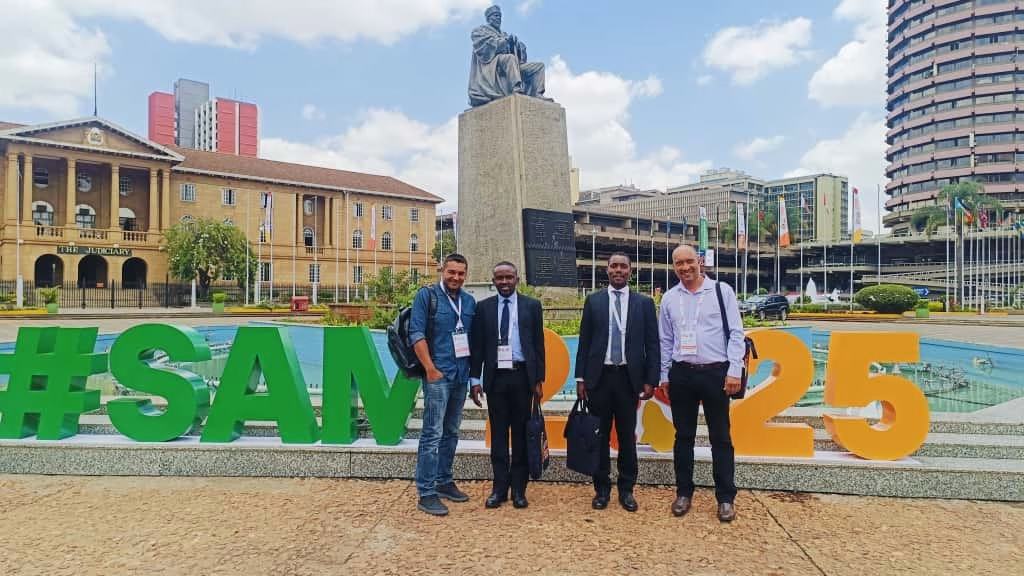
October 27, 2025
Driving RDF Uganda Financial Inclusion: Critical Insights Gained at SAM 2025
It was an immense honor for Rural Development Foundation (RDF) to participate in the African…
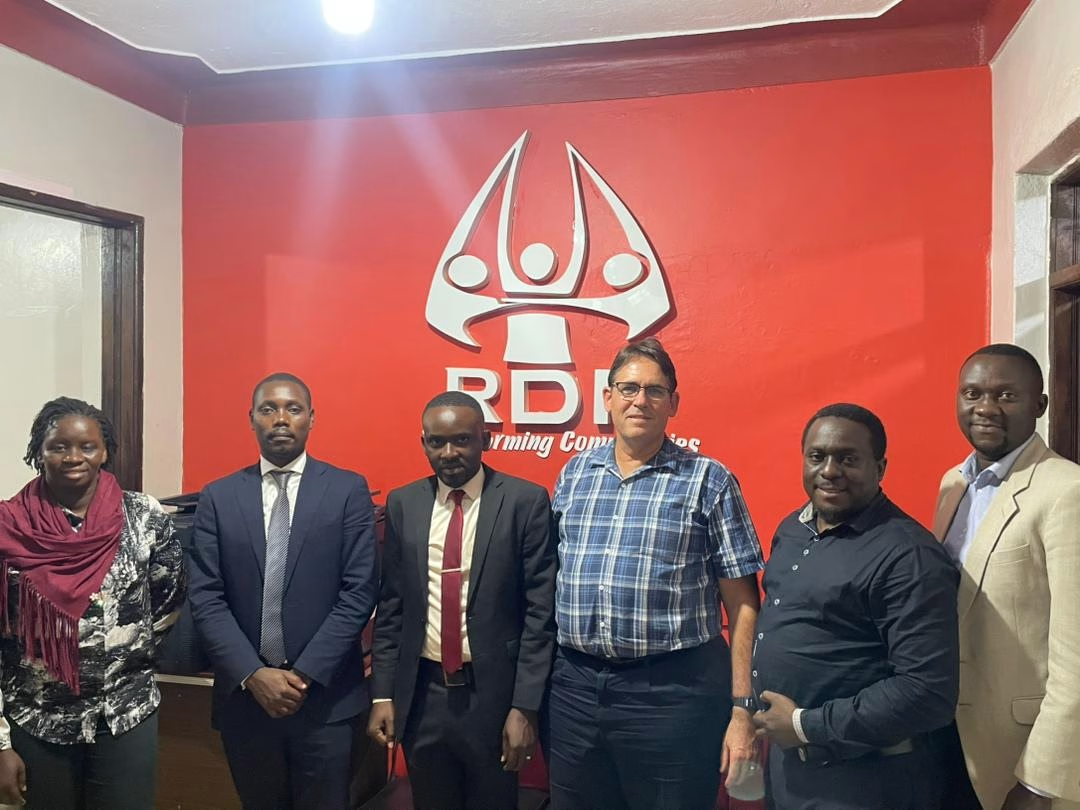
October 27, 2025
Unlocking Progress The RDF Envest Partnership Masaka Visit
In rural Uganda, access to finance is more than just a loan it is a…
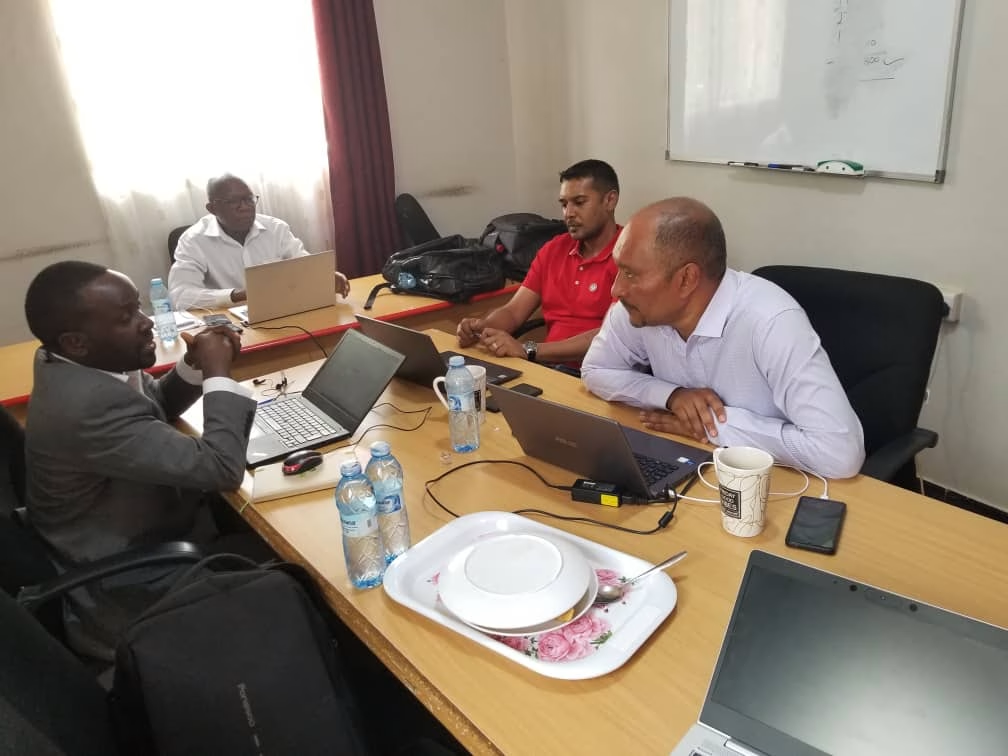
October 27, 2025
Growing Partnerships, Nurturing Progress. RDF and Moringaway Team Up for Rural Farmers
We understand that turning potential into progress requires capital, commitment, and a healthy dose of…
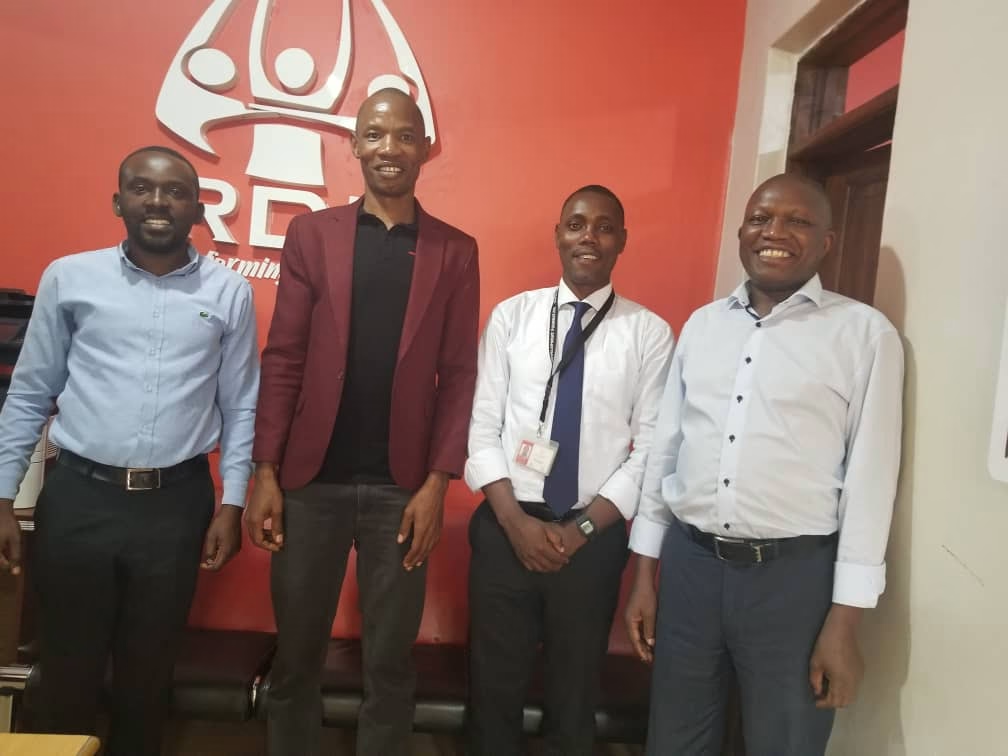
October 27, 2025
Strengthening the RDF UNCAP Partnership for Rural Entrepreneur Growth
Unlocking potential in rural Uganda requires more than just capital; it demands strategic commitment. The…


