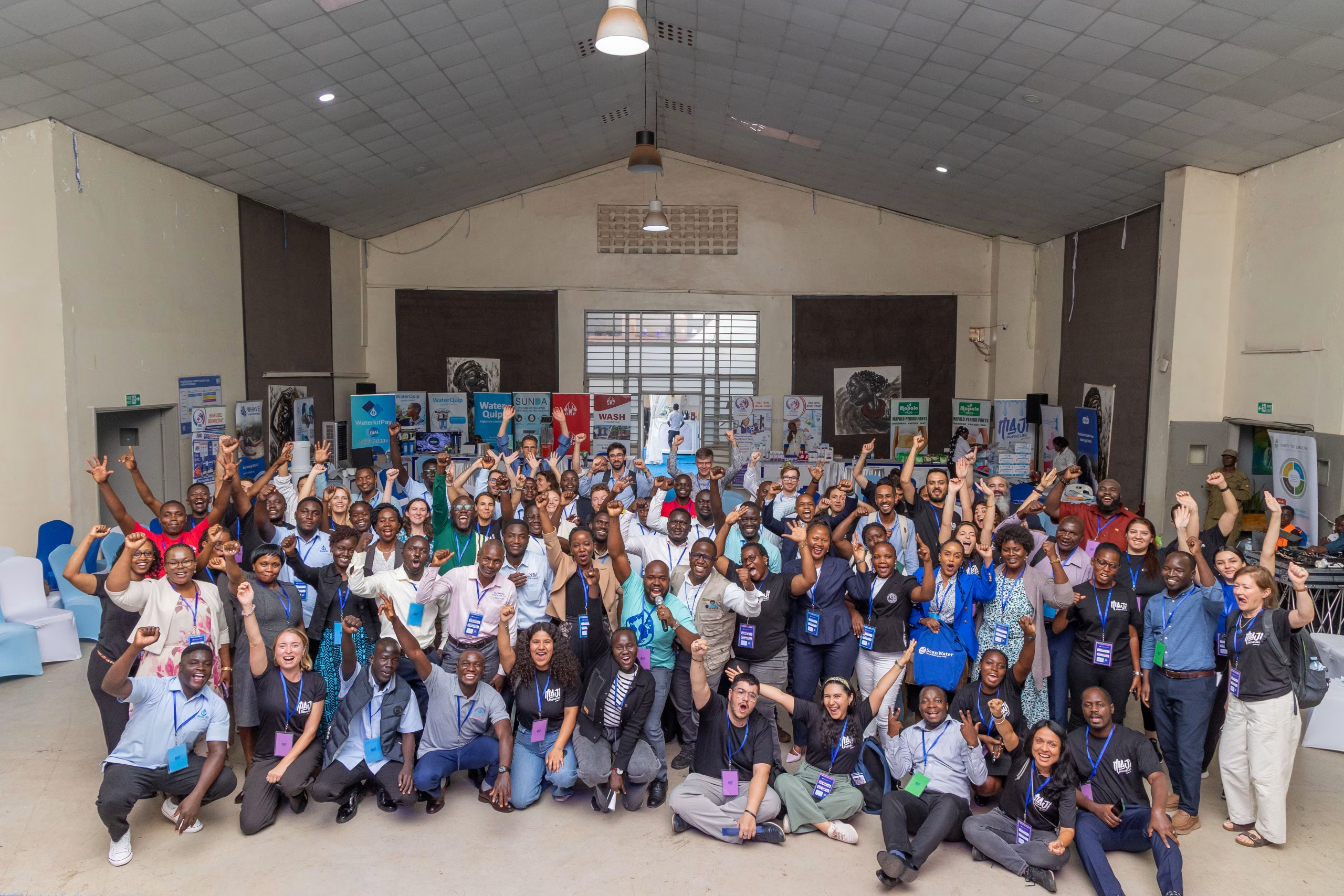
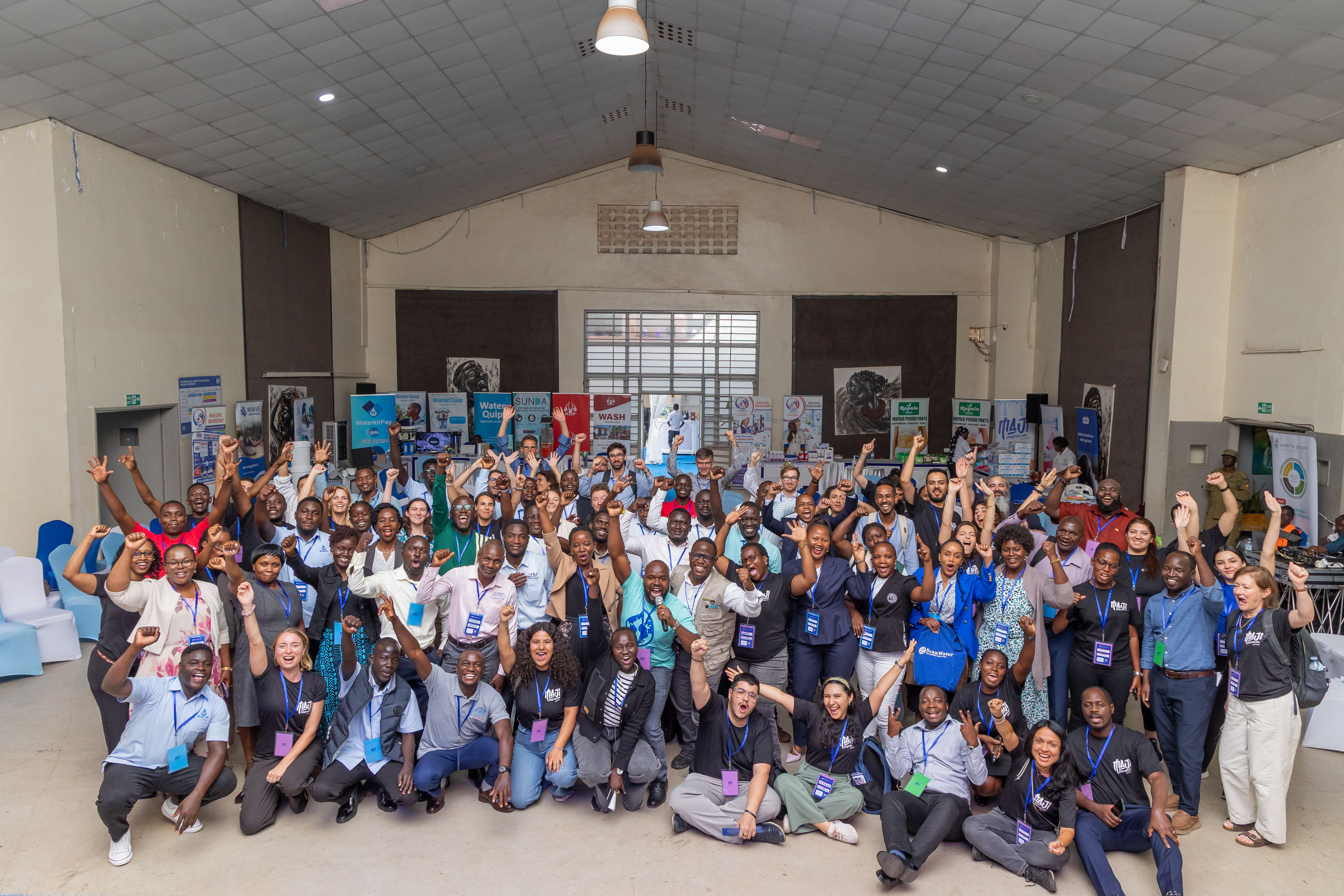
Rural Development Foundation (RDF) joined local and international stakeholders at the Uganda Majipreneurs Summit 2026, coordinated by CEWAS, under the theme “Shaping the Ecosystem, Navigating Opportunities, Building Impactful WASH Enterprises.” RDF already runs a dedicated Sanitation Loan programme, so the summit’s central question felt familiar: how do we expand access to water, hygiene, and sanitation (WASH) services while helping WASH enterprises get the capital they need to grow?
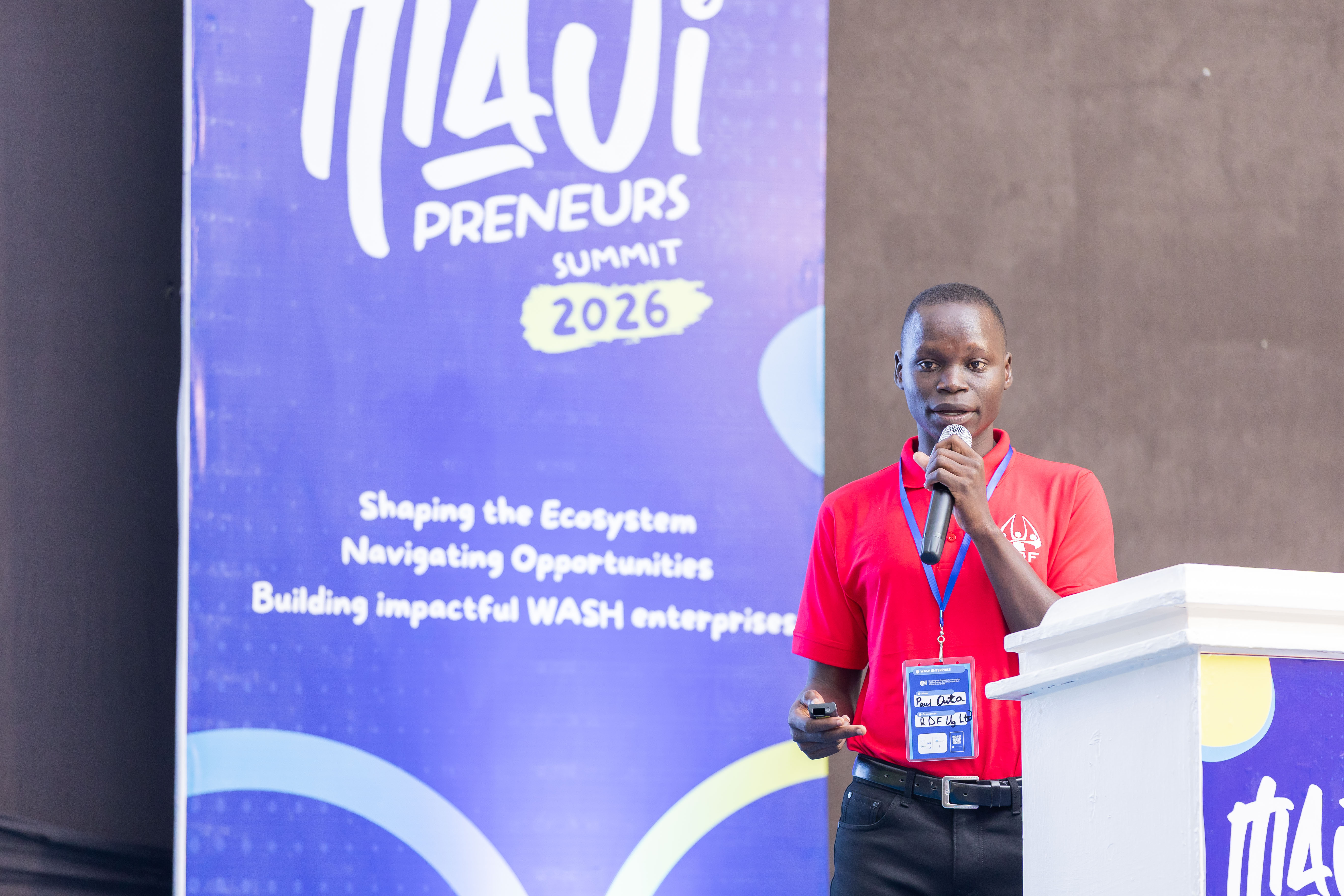
RDF’s Resource Mobilisation Officer, Paul Outa, addressed the plenary on the summit’s core theme. Colleagues Brian Kawuki, Sam Bahame, and Mark Ntwatwa represented RDF across breakout sessions and the summit marketplace, making RDF one of the more active financial institutions at the event.
What Is the Majipreneurs Summit, and Why Does It Matter for Uganda?
The Majipreneurs Summit brings WASH entrepreneurs, financiers, and development partners together to work on a problem that has quietly limited Uganda’s sanitation progress for years. Good ideas rarely fail for lack of ambition. They fail for lack of financing structured around how WASH businesses actually earn and spend money. “Majipreneurs,” a term blending maji (water, in Swahili) with “entrepreneurs,” describes the small businesses building latrines, water points, hygiene products, and sanitation services at the community level. These are the enterprises closest to the households RDF serves every day.
CEWAS, the summit’s coordinating organisation, works across East Africa to grow sustainable WASH markets by connecting entrepreneurs with the skills, networks, and capital they need. Sanitation is a public health issue, but it’s also an economic one, and lasting change comes from strengthening the businesses that deliver it, not just subsidising the end product.
Why Uganda’s WASH Enterprises Need Smarter Financing
Access to finance remains the single biggest obstacle for WASH entrepreneurs in rural Uganda. A latrine builder or water-point technician typically needs capital upfront, for materials, labour, and transport, long before a household can pay in full. Conventional lenders often treat these businesses as too small, too seasonal, or too risky to finance on workable terms, leaving a gap between what communities need and what entrepreneurs can afford to build.
This financing gap came up again and again at the Majipreneurs Summit 2026. In a breakout session co-led by RDF staff on building a “Finance and Expertise Hub” for the WASH sector, participants worked through what WASH enterprises actually need beyond capital alone:
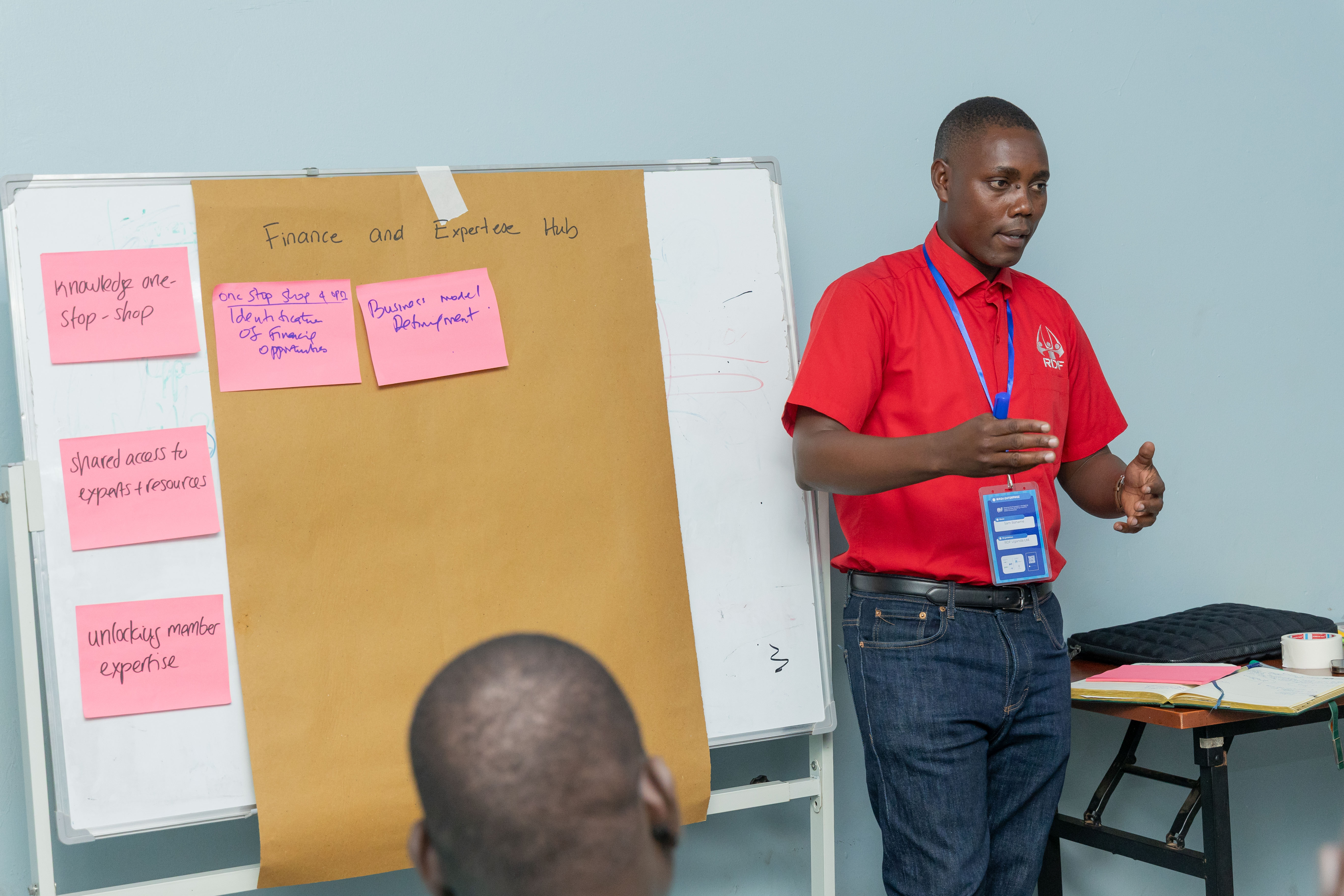
- Identification of financing opportunities: helping entrepreneurs find and qualify for the right financial products, not just any credit.
- Business model development: support structuring a WASH venture so it’s financially sustainable, rather than dependent on one-off grants.
- A knowledge one-stop-shop: a shared space where majipreneurs can get technical and financial guidance without starting from scratch each time.
- Shared access to experts and resources: pooling specialist knowledge across the sector rather than each enterprise sourcing it alone.
A parallel breakout on “Peer Exchange Rhythm” tackled a related question: how often, and in what form, should WASH entrepreneurs meet to keep learning from each other? Participants pointed to regular physical convenings, structured site visits, and a clearer membership process as the things most likely to keep momentum going between summits.
RDF’s Sanitation Loans: Financing Built for the WASH Economy
RDF’s Sanitation Loan Programme exists to close the gap the summit kept coming back to. Clients access flexible financing with a repayment period of up to one year, structured to work with the realities of rural income rather than against them. That client might be a household installing a water tank or sanitation facility, or a local entrepreneur building the infrastructure communities rely on.
This sits alongside RDF’s three other pillars of support: Microfinance for agriculture, livestock, business, and education; Social Enterprise backing for ventures that create local jobs and solve community problems; and Education Programmes, including the financial literacy training every client receives before a loan is disbursed. These four pillars reflect RDF’s core approach: poverty, ignorance, and disease are connected problems, so they need a connected response.
That’s also why sanitation financing has never been an afterthought at RDF. Clean water and safe sanitation protect the economic gains families make through microfinance. A household that spends money treating preventable illness is a household that can’t invest in its business or its children’s education. Financing the WASH economy and financing rural development are, in practice, the same job.
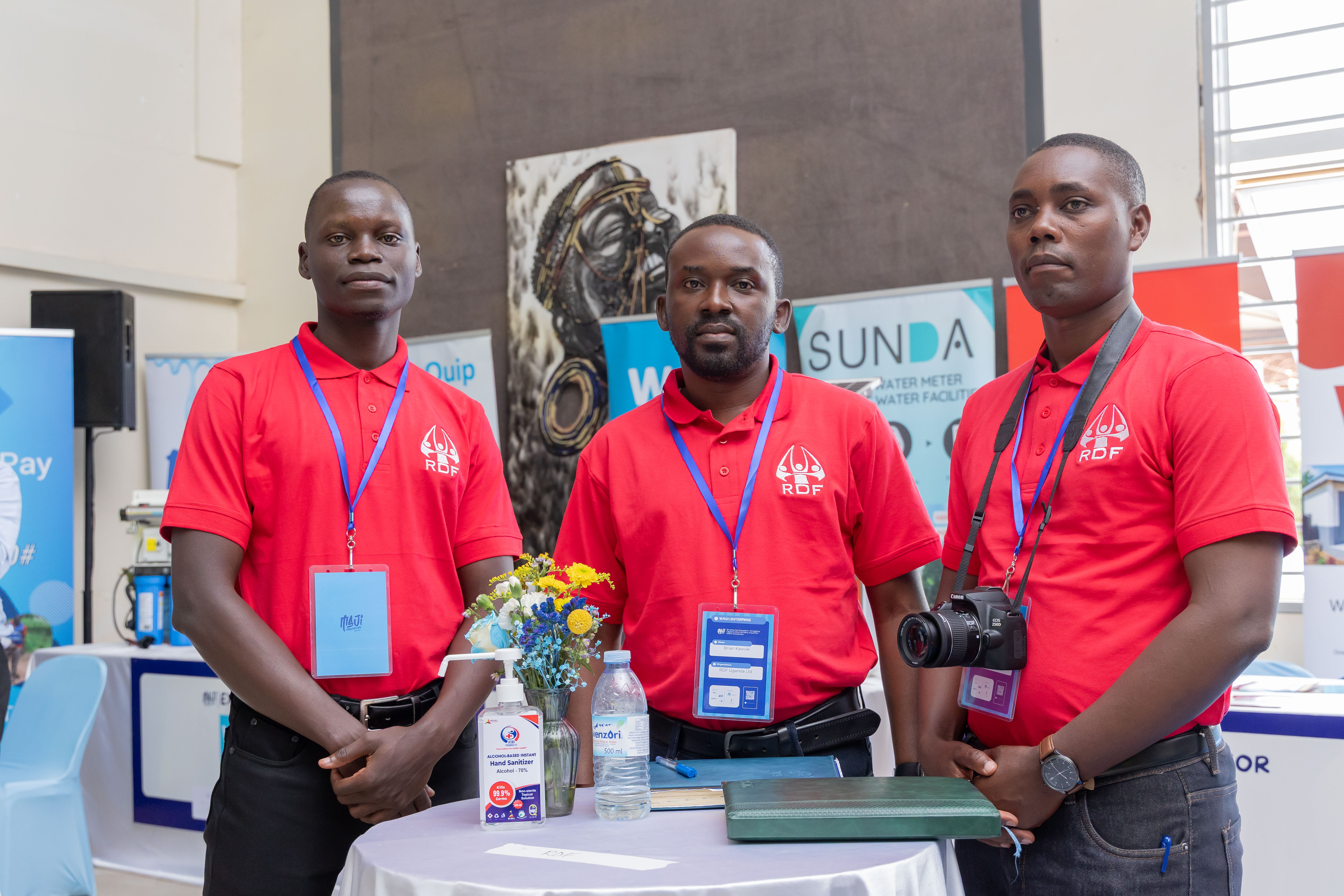
At the summit marketplace, RDF’s exhibition stand sat alongside WASH-sector peers like WaterQuip Uganda Limited and SUNDA, whose prepaid water meter system helps public water facilities manage access and payment. Conversations at the RDF booth kept landing on the same practical question majipreneurs face daily: how do you turn a good WASH product or service into a business that actually holds up financially?
Key Takeaways from the Majipreneurs Summit 2026
RDF’s team came back from the summit with a few things reaffirmed and a few things sharpened:
- The financing gap is the real bottleneck. Technical solutions for water and sanitation already exist. What communities lack is capital structured to deliver them at scale.
- Financial literacy is non-negotiable. The summit’s strongest consensus matched RDF’s existing practice: training clients before advancing credit is the most effective safeguard against over-indebtedness and project failure.
- A shared finance and expertise hub could multiply impact. The breakout RDF helped lead pointed toward a future where majipreneurs get financing guidance and technical expertise through one coordinated channel, instead of fragmented, one-off support.
- Partnership multiplies impact. Conversations with CEWAS, fellow practitioners, and WASH entrepreneurs across the room were a reminder that no single institution, RDF included, can close Uganda’s sanitation gap alone.
- Local entrepreneurs are the delivery mechanism. Majipreneurs, not large contractors, are often best placed to reach the last mile. Financing them directly is one of the most effective ways to scale WASH access.
Looking Ahead: RDF’s Commitment to the WASH Sector
RDF’s participation in the Uganda Majipreneurs Summit 2026 was more than a networking opportunity. It was a chance to exchange ideas, build connections, and work through practical ways to strengthen WASH businesses and reach more communities. Thank you to CEWAS and everyone who brought these conversations forward.
Uganda’s rural communities still need wider access to water, hygiene, and sanitation, and RDF stays committed to financing the entrepreneurs and households building that access from the ground up.
To learn more about how we are driving rural transformation across all four pillars, visit our Solutions page, or read how our Sanitation Loans are already improving community health in rural Uganda.
#WASH #Water #Sanitation #Hygiene #SocialEnterprise #ImpactInvestment #Partnerships #RDF #CEWAS #Majifund
Post a comment
Related Posts
October 27, 2025
Driving RDF Uganda Financial Inclusion: Critical Insights Gained at SAM 2025
It was an immense honor for Rural Development Foundation (RDF) to participate in the African…
October 27, 2025
Unlocking Progress The RDF Envest Partnership Masaka Visit
In rural Uganda, access to finance is more than just a loan it is a…
October 27, 2025
Growing Partnerships, Nurturing Progress. RDF and Moringaway Team Up for Rural Farmers
We understand that turning potential into progress requires capital, commitment, and a healthy dose of…